Solar-powered charging stations that work every day — paid by IC card, mobile money or cash.
Explore Solutions Talk to UsAcross Sub-Saharan Africa, phone charging is a daily struggle — not because phones are scarce, but because reliable power is.
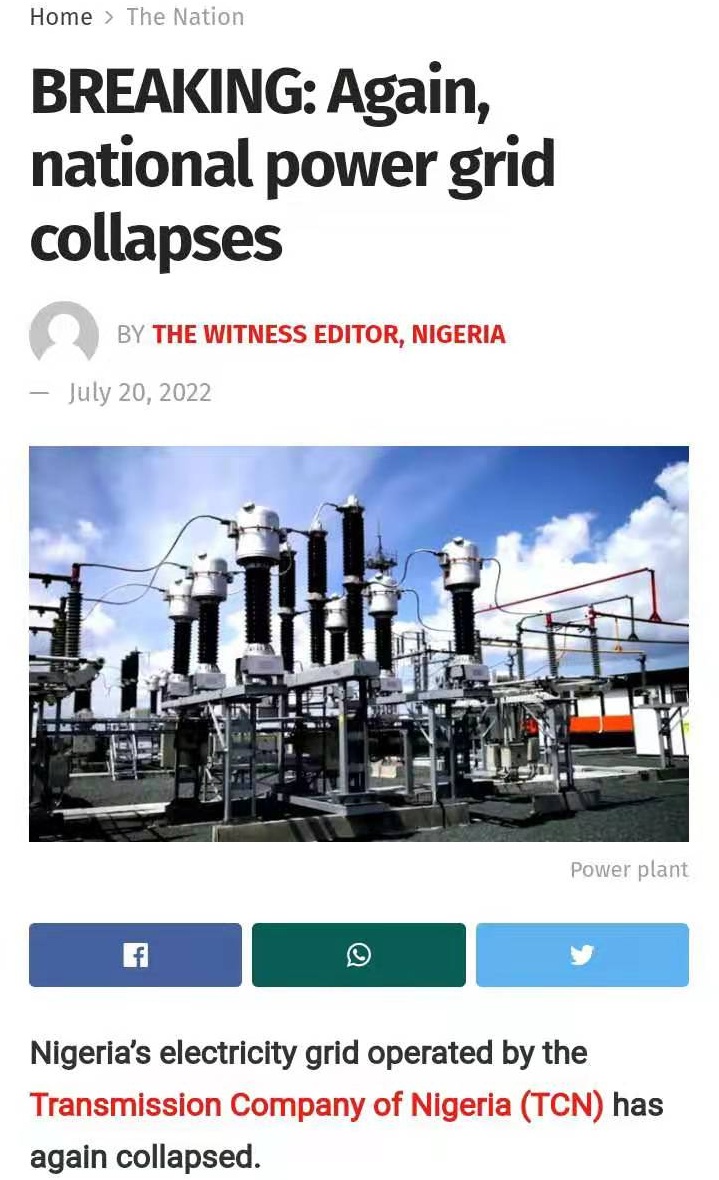
National grid failures make headlines again and again. In many areas the power is out more often than it is on — a wall socket is never a promise.
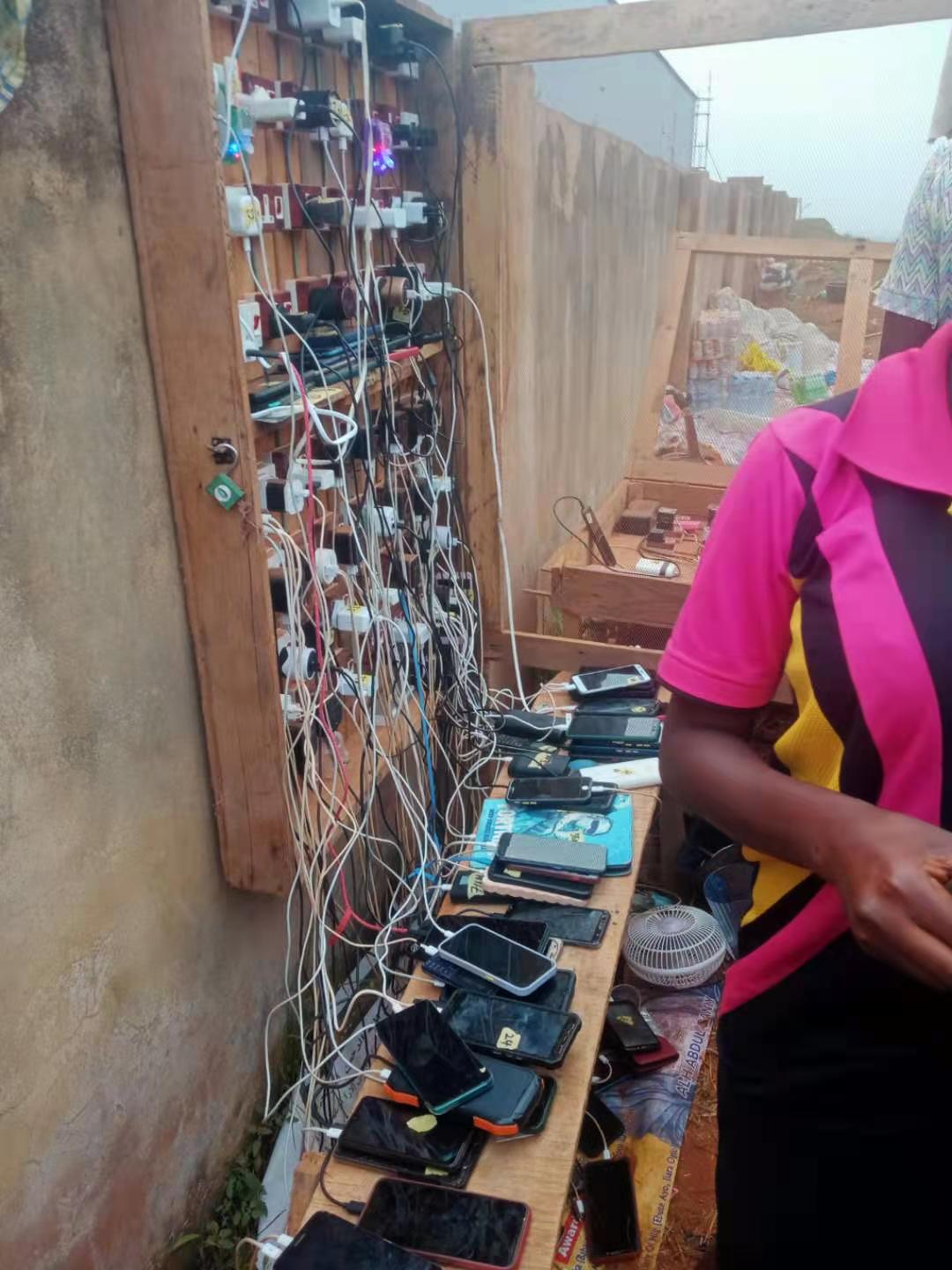
Makeshift boards, overloaded adapters and tangled cables. People leave phones for hours with strangers, with no metering, no security and no protection for their data.
FLOWVISUAL SolarKiosk delivers secure, metered, solar-powered charging stations — each port individually controlled, each payment recorded, powered entirely by the African sun. No grid. No fuel. No chaos.
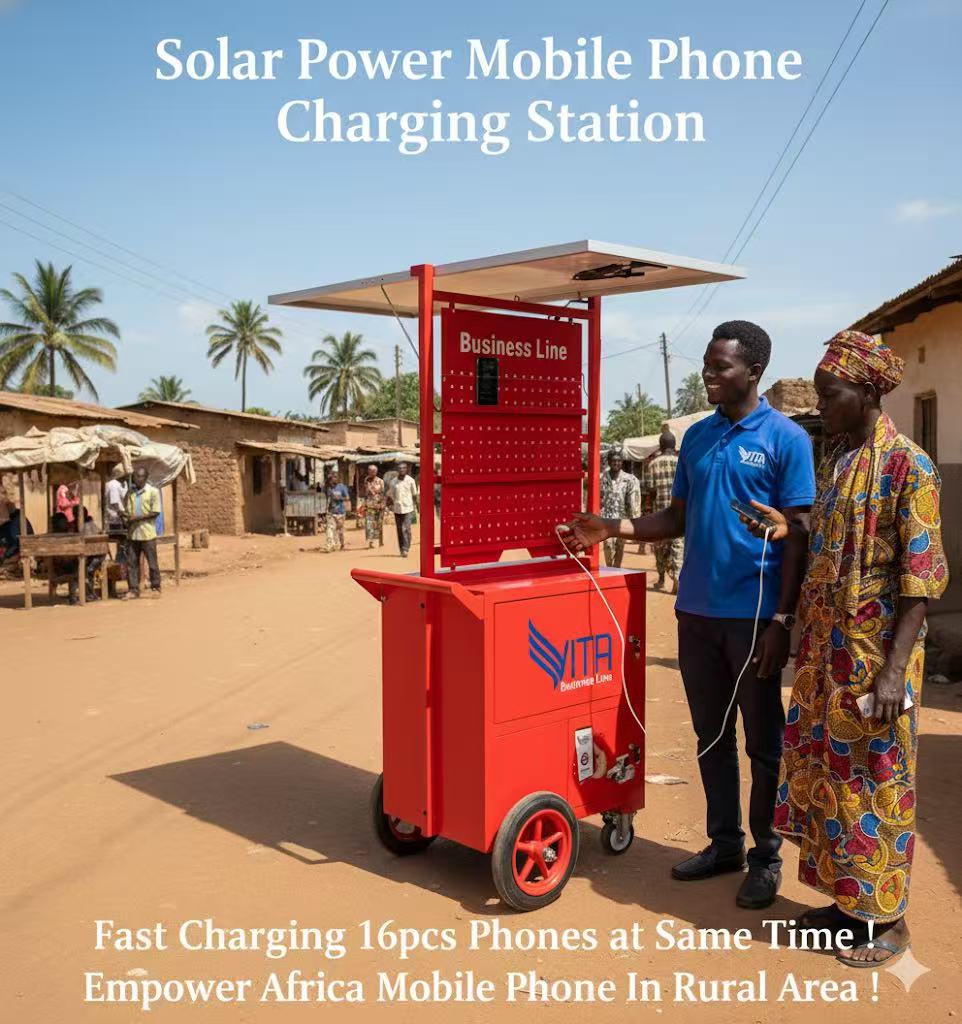
Matched to local purchasing power and operating scenarios — from a one-person street cart to an indoor wall-mounted charger. All stations connect to the same cloud management platform.
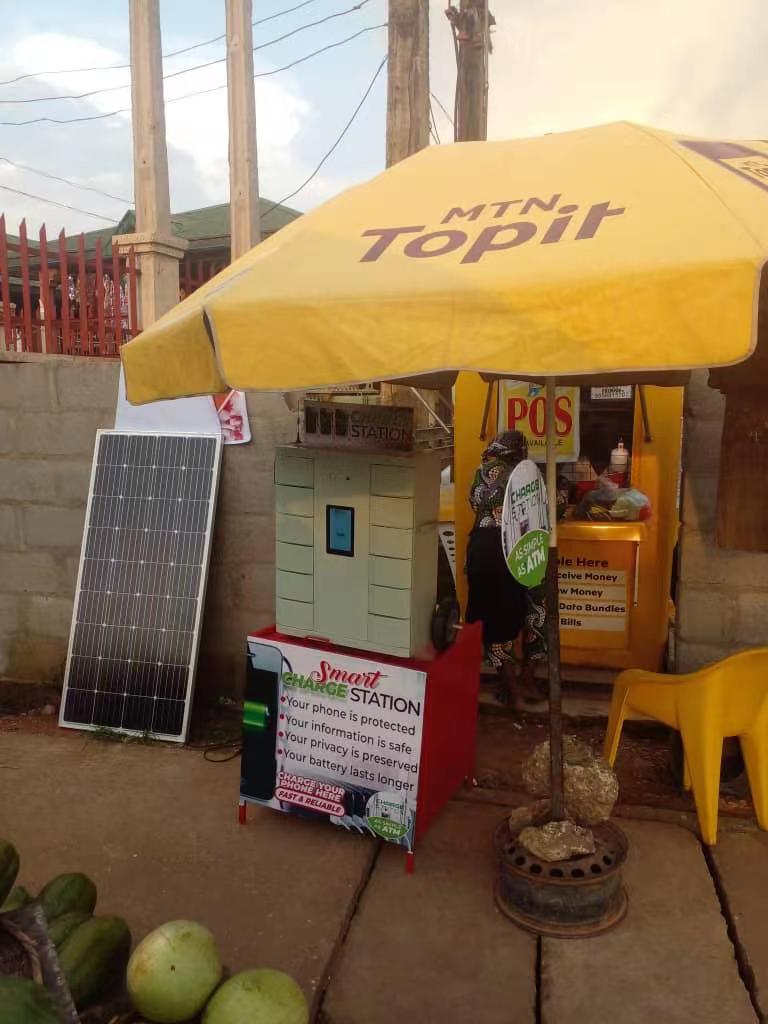
Wheeled 0.8mm powder-coated steel cart with folding solar canopy. 16 USB fast-charge ports (5V/3A, 9V/3A, 12V/2.5A), 150W mono panels ×2, 12V 120Ah lithium battery, 1200W inverter with AC/gas generator backup, GPS tracker.
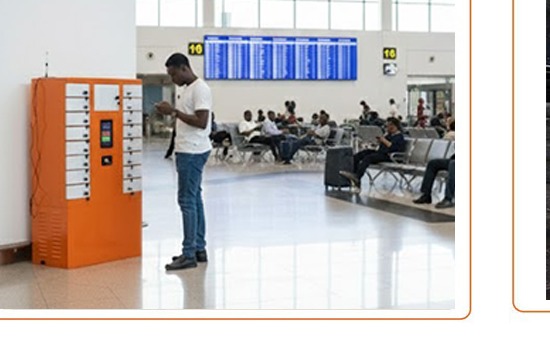
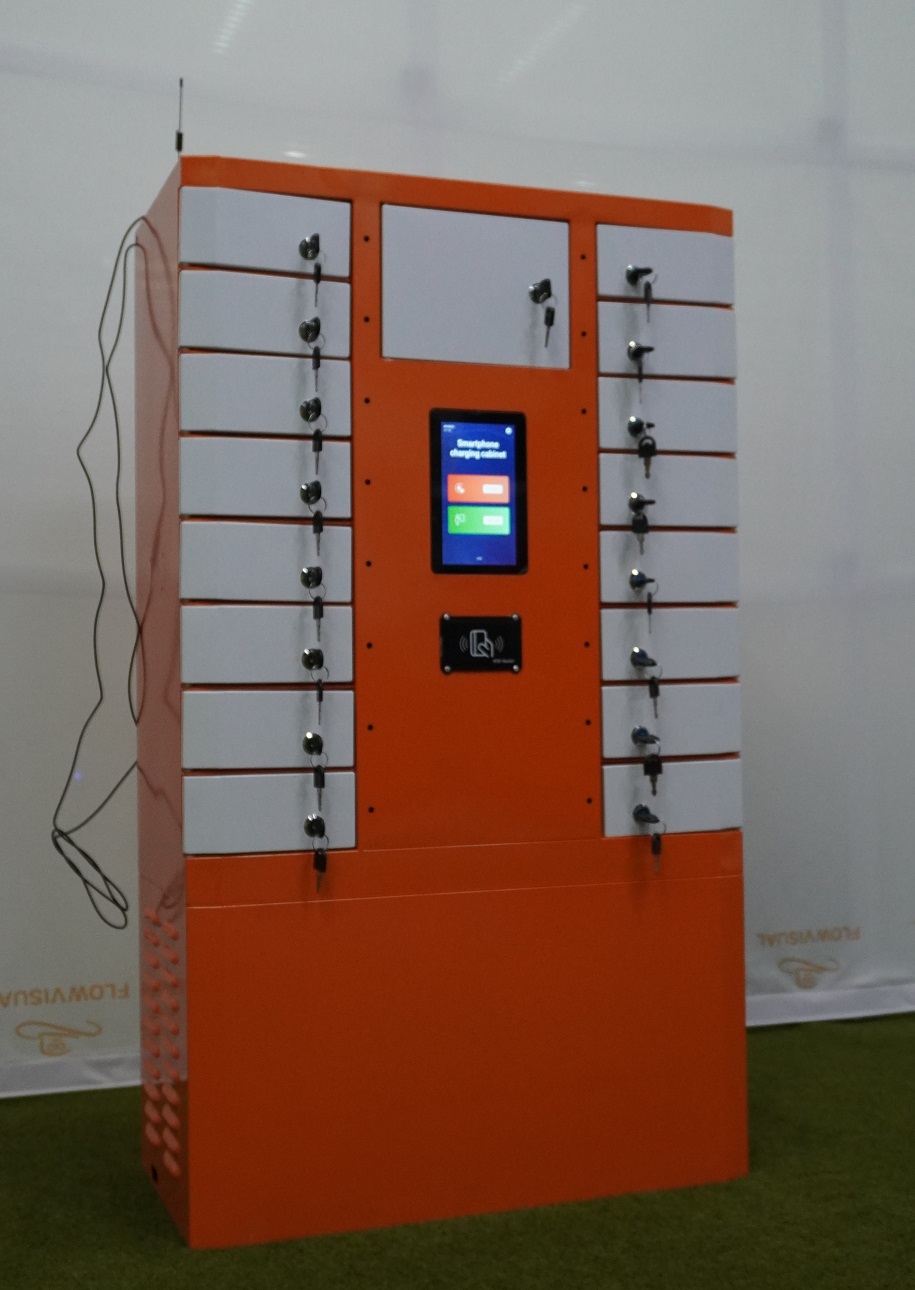
Unmanned 16-port cabinet with IC card top-up and per-port control. Android terminal + RS485 port control board, real-time current metering and cloud billing — our proven core system.
Same hardware, payment switched to Flutterwave mobile money (M-Pesa, MTN, Airtel). Users scan, pay in local currency, port unlocks — ideal where bank cards are rare but phones are everywhere.
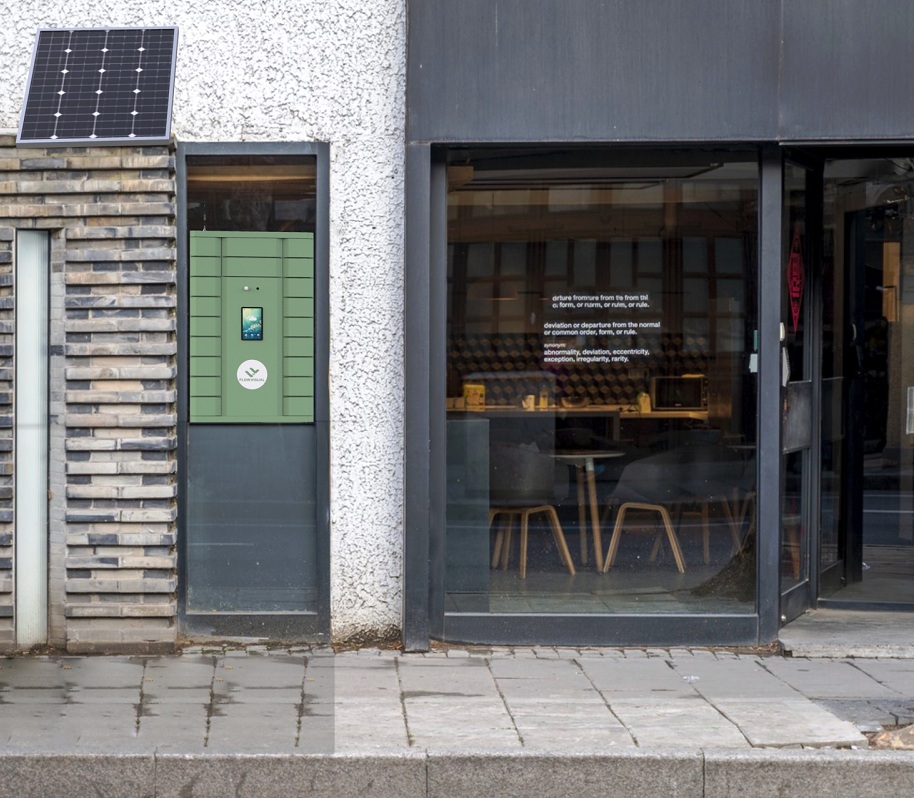
For shops, kiosks and public spaces with grid power: compact AC-powered charging counters with the same card/MoMo payment core. Rentable to shop owners as a value-added service.
No engineering degree needed. Here is exactly how a SolarKiosk station works, from the moment a customer pays to the moment you see the money in your dashboard.
The customer taps an IC card or scans a QR code with M-Pesa / MTN MoMo / Airtel Money. The touchscreen confirms in 2 seconds. No smartphone? The site operator can accept cash and start the port for them.
A small Android computer inside the cabinet sends a command over an industrial cable (RS485) to the control board — like a light switch, but one switch per charging port. Only the paid port turns on.
The control board measures current, voltage and temperature on each port in real time. When charging finishes (or time runs out), the port switches off automatically — no waste, no arguments.
Each transaction travels via 4G to the cloud dashboard: which port, how long, how much money. If a cable is cut or a door is forced open, you get an alarm instantly.
Three-level account management: every person logs in and sees exactly what they should — no more, no less. Money flows up, reports flow down.
One prefabricated solar kiosk = a complete small-business platform. The operator owns the box and rents it out; entrepreneurs step in and start earning the same day.
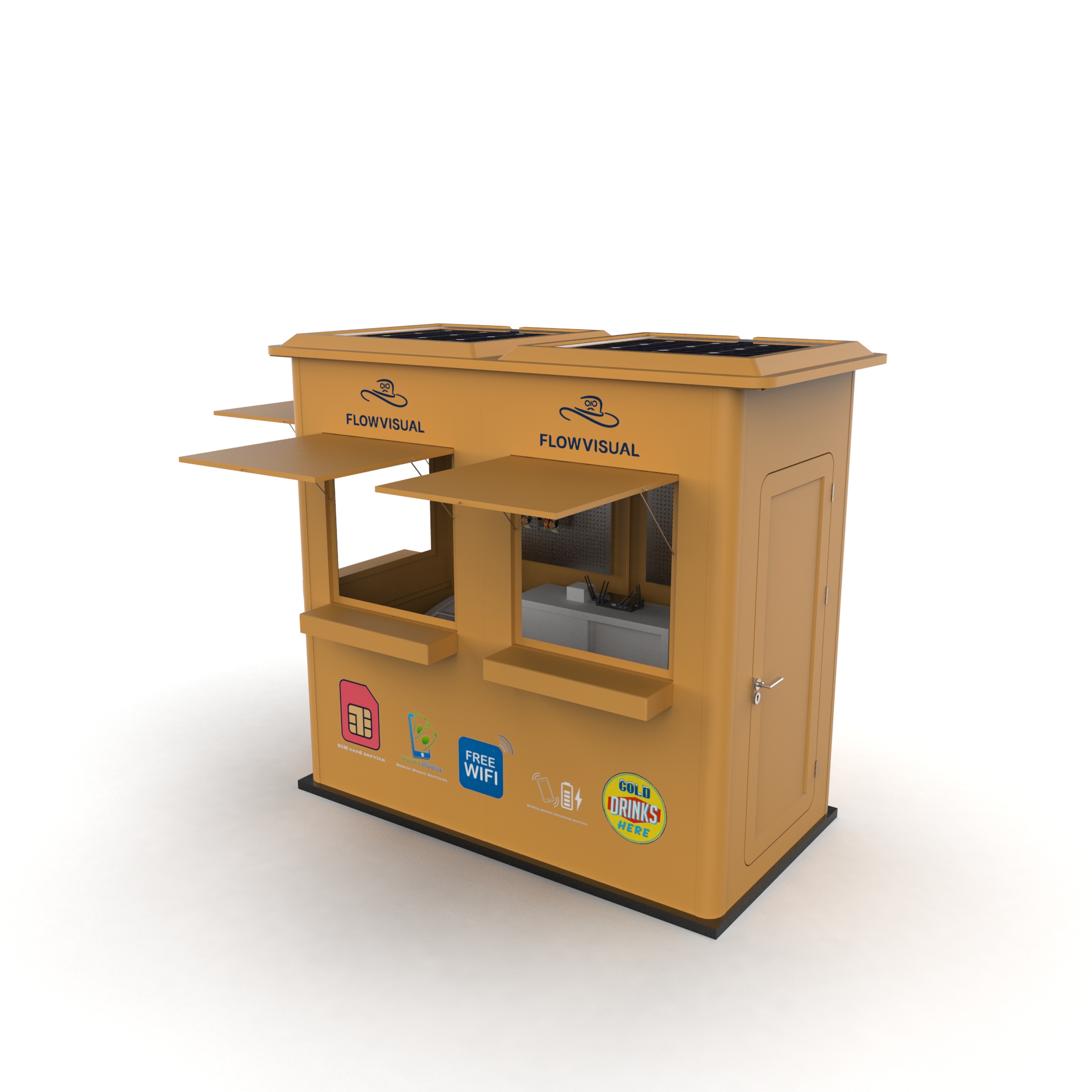
Born from our sheet-metal fabrication and FRP kiosk production lines, the SK07B modular branded solar kiosk turns one 1950×2650×2400mm galvanized steel box into a whole micro-economy — phone charging, telecom services, mobile money, retail, even a barber or tailor shop. For many African communities where monthly income is under $100, this is the lowest-cost storefront possible — and a real job for unemployed youth and persons with disabilities.
The same kiosk upgrades into a small-scale telecom hub — internet where the mobile network doesn't reach.
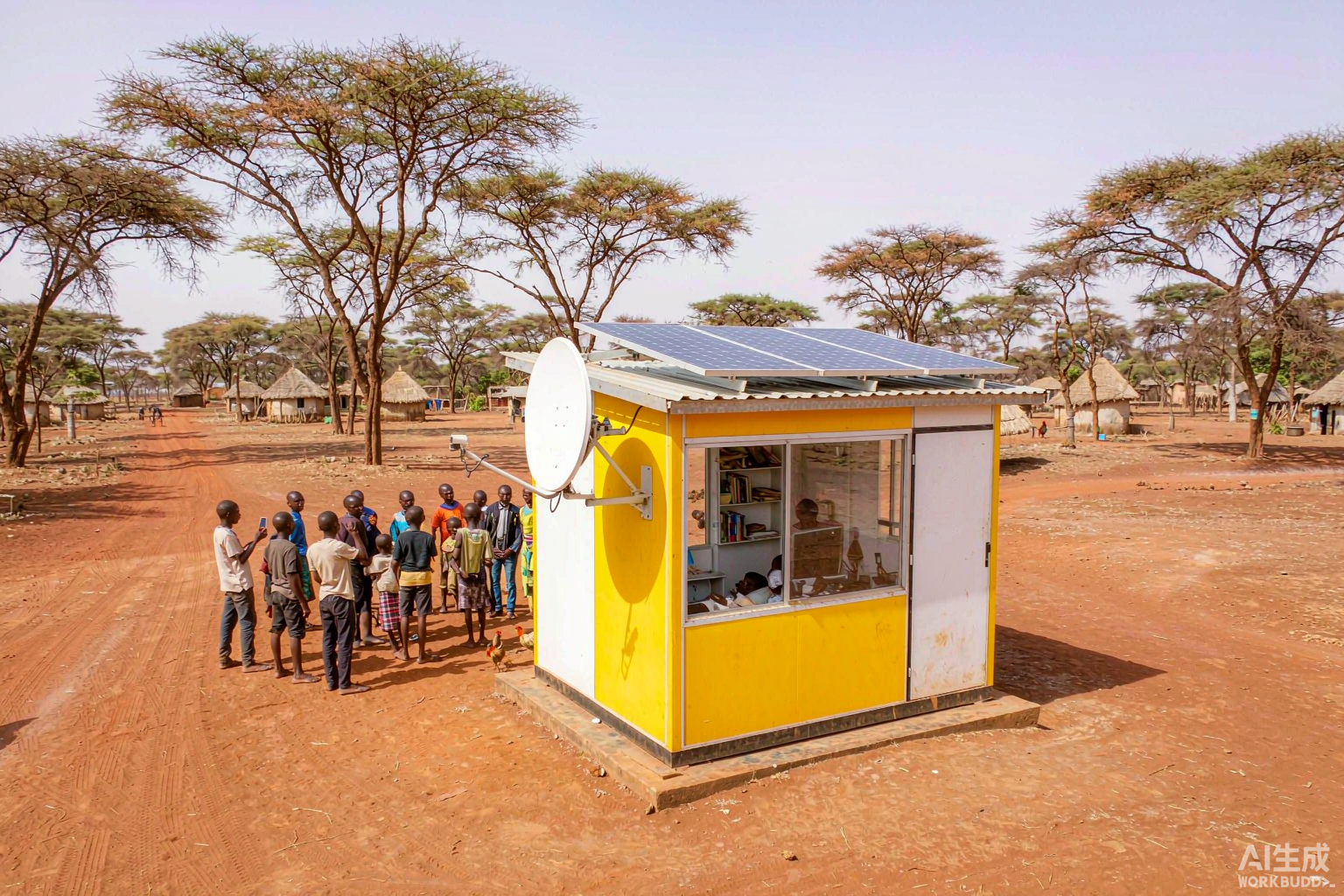
Satellite broadband reaches villages no fiber or tower ever will — mounted right on the kiosk roof.
Meta-material Luneburg lens router: signal dozens of times stronger than standard antennas, indoor 500–3,000㎡ / outdoor up to 100,000㎡ coverage, mesh multi-hop networking.
256 concurrent users, 150 streaming video at once, 1800Mbps. 15W power draw — trivial for the solar system.
WiFi vouchers, charging, airtime and retail from one site — connectivity becomes your highest-margin product.


Our concept is proven by Rural Digital Center projects already running in Nigeria (Hotspot Network × MTN): rural Nigeria is 50% unconnected to the digital ecosystem, only 23% of rural households have electricity, and 37% are unbanked. Those projects prove enormous demand — but they rely on 40-foot container centers and traditional solar mini-grid construction: heavy, slow, permanent.
Over 600 million people in Sub-Saharan Africa lack reliable electricity. Phone charging is a daily, cash-backed, non-discretionary expense — and solar removes the fuel cost entirely.
16 ports × $0.1–0.15 per charge, 3–5 cycles/day in busy markets.
Depends on traffic and pricing; field data from Nigeria & Kenya deployments.
You run the country, agents run cities, platform handles billing — revenue split automated.
No generator fuel, no grid bill. Generator input only as backup.
Charging + retail + printing + SIM/airtime sales multiply income per site.
Every station displaces small gasoline generators — fundable via green programs.
We customize by country economy level and site scenario — one product family, many configurations.
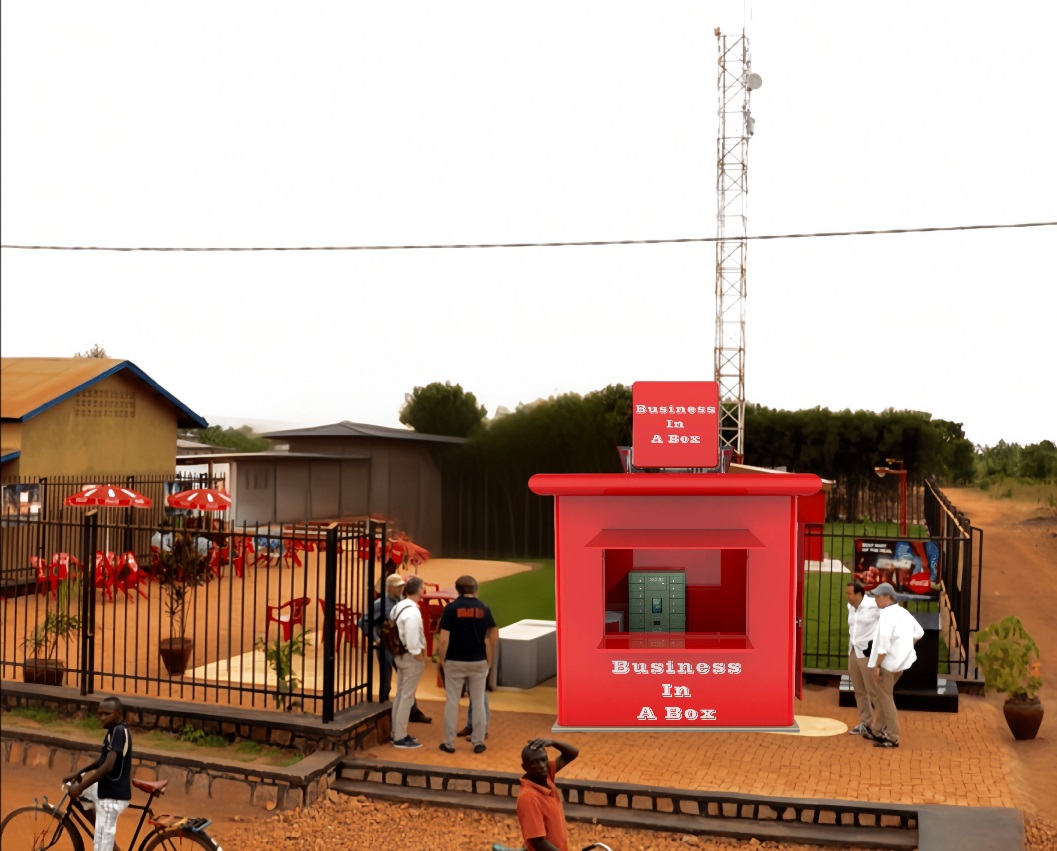
A branded solar kiosk planted where people gather — outdoor café seating, shops, passing foot traffic. Inside: 16-port smart charging cabinet plus retail & telecom counter. One operator, multiple daily revenue streams, cloud-managed from day one.
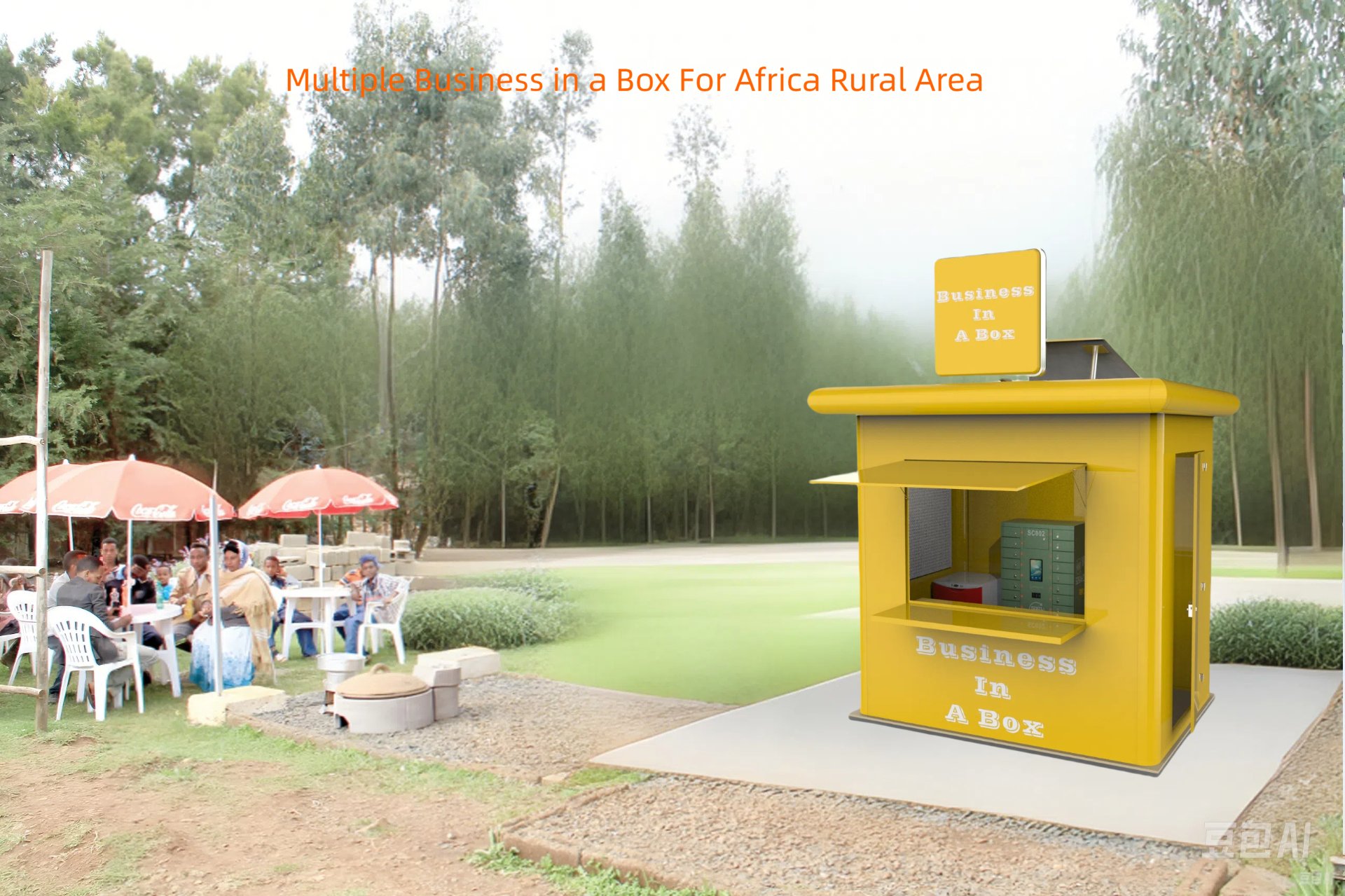
In villages with no grid and no network tower, the kiosk becomes the community hub: solar charging, WiFi vouchers via Starlink + Super WiFi, airtime & mobile money — with residents gathering around, the way a marketplace should feel.
Tell us your market and scenario — we deliver station + payment system + cloud platform as one package.
Scan to chat on WhatsApp